By Denie Riggs
Education is a hot topic in America at the present time. President Trump is working to shift the responsibilities of the Department of Education to the 50 states. A significant factor contributing to this shift is the poor performance of American students on academic assessments.
American students rank last among 40 nations in educational scores, with particularly low proficiency in mathematics and reading. While our students are performing last, America spends many times more than other nations ranking higher than we are. In fact, in 2019, America spent 5.44% of our Gross Domestic Product (GDP) on education. That’s $752.3 billion dollars, 38% more tax dollars for elementary/secondary education and 50% more on postsecondary education than any other nation. Funding is not the issue; academic results are lacking.
These astounding statistics are not new. Educational leaders, aware of the need for change, have been working to reverse this trend.
Every Student Succeeds Act (ESSA), a federal law passed in 2015, recognizes music as a crucial part of a “well-rounded education,” providing opportunities for arts education funding and encouraging schools to assess their ability to offer such programs. But even with that new law, the change has not produced academic results.
Why are our students still failing? Let’s drill down a little bit, we may discover a few reasons.
First, even with this law in place, over 3.6 million children, mostly from large inner cities, lack basic musical education at school. Hopefully, Mr. Trump’s new leadership will change this. When music education reaches these children, America’s report card should gradually improve?
Maybe. Maybe not. Why?
There are many things that contribute to America’s decline, and there are some contributing factors that educators and parents may need to be aware of.
Music is Power
What counts as music education? Music is music, right?
Wrong!
As with most things, the more you put into something, the greater the benefits you reap from it. Same with music education.
Four Levels of Engagement with Music
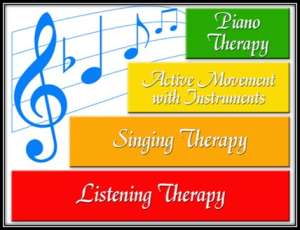 Based on a study of the benefits of music, I have separated musical engagement’s benefits into four categories. I call them the Four Levels of Engagement.
The benefits increase as you step up the ladder of engagement.
The 1st Level of Engagement is passively listening to specific types of music. There are specific criteria for Preferred Music that benefit the listener. Just listening to this type of music brings great physical, emotional and even academic benefits.
The 2nd Level of Engagement is singing. When a person sings, more engagement is involved than just listening to music, so the benefits increase.
The 3rd Level of Engagement involves active participation with an instrument. Beating a drum or playing the clarinet are both in this category, but the amount of engagement differs greatly between the two activities. So of course, the benefits will also vary by the level of engagement required to perform to proficiency.
The 4th Level of Engagement is also with a musical instrument, but the benefits received exceed those of all other instruments, making it deserving of its own category. This instrument is the piano.
The Amazing Piano
Extensive research in music benefits suggests that participation with the piano significantly enhances academic performance.
Research shows that when a person plays the piano and sings, every part of their brain is engaged. This is true for all ages, but age matters.
- When piano is studied in early childhood’s formative years, neural synapses form and cross the hemispheres of the brain, linking permanently, creating enhanced brain wiring for the remainder of that person’s life.
- When interacting with piano after the early formative years, after around age seven years, a person’s brain is formatted for orderly storage and retrieval of information for 4-5 hours after they practice. Piano students are encouraged to practice in the morning, before academics, bringing greater academic enrichment.
 Since 1998, we have witnessed the benefit of early strong piano study first-hand. Our non traditional Early Childhood Music (ECM) piano curriculum enables very young children to engage with the piano.
We have been tracking the academic scores of our ECM graduates since 2006 as they completed the 2.5-year program, typically at age 7-8 years. Most graduates are reading at language levels 2-3 grades higher than their peers and achieve straight A’s in their academic subjects. This suggests an association between early, intense piano study and improved academic performance.
Elective Music vs. Required Music
Another reason that may contribute to America’s poor report card is our unawareness of the power behind active engagement with music.
America does not have a national standard for music education. Elective Courses are frequently offered like Music Appreciation, Music Theory, Study of Classical Composers or Music History. While these subjects may check off the Federal Government’s required music box, they do not provide the necessary benefits of active musical participation that produces amazing academics.
From the top down, educators need to impress upon their schools and parents the importance of active participation with Levels 3 and 4 musical engagements, by setting structures and standards for instrument training and proficiency at school.
Leading countries in academic excellence mandate active music engagement for students, requiring all students to play Level 3 or Level 4 engagement instruments to proficiency.
Governance Music Structures of Leading Nations
Some countries get it, and it shows! Let’s examine the structures of some leading nations, focusing on their Gross Domestic Product (GDP) allocated to education and the Levels of Engagement required.
- Japan allocates approximately 3.5% of its GDP to education. Since 1998, Japanese students have been required to study music weekly from kindergarten through 12th grade on Levels 3-4 engagement on instruments such as violin, piano, accordion, recorder, harmonica, and organ.
- Germany allocates approximately 4.8% of its GDP to education. Music education is a required subject with students attending lessons at school weekly. Their musical study includes Levels 3-4 Engagement on piano, guitar, and violin.
- South Korean students currently rank number 1 in academic grades. In 2021, South Korea spent 5.2% of its GDP on educational institutions. South Korean schools require 272 hours of music/art for all students in grades 1-3 each school year. Korean students study the piano, strings, wind and percussion. Students must meet proficiency standards on their instrument by Grade 8 before moving into higher education.
- Finland spends about 6.1% of its GDP on education. Music is a core subject, all students are required to attend active music training for 8 hours weekly at school, as part of the comprehensive school curriculum (Grades 1-9). Finnish students study piano, accordion, recorder, voice, and a Finnish instrument called the Kantele. Their reading and math scores reflect their diligence!
- Sweden allocates 7.57% of its GDP on education. Sweden believes that individuals who cannot play an instrument lend to the lower social class of their country. So active engagement is a mandatory part of the country’s school curriculum. Students may choose from Levels 3 and 4 engagements on the piano, accordion, recorder, and voice.
Conclusion for Parent and Educators
We have seen that throwing money at education doesn’t necessarily bring desired results. Active engagement with music helps achieve those goals. What better place to provide that than at school, so all children are enriched.
Here are some Parent ideas and tips:
- Share this article with your school administrators, your music teachers, your friends, and your local politicians. Help support Levels 3 and 4 music training at your school.
- Until that happens, enroll your children in active participation lessons. Find a good piano teacher, sign them up for band, or both!.
- Support their practice to proficiency. (You don’t have to purchase a grand piano! A keyboard station can cost around $125 with headphone capability!)
- Reward your child’s efforts. Make a big deal of their progress because it is a big deal.
Here are some Educator and Administrator tips:
- Every school, in every city, needs to immediately take steps to include active musical participation. Spend your energy and money wisely for the greatest results by including Levels 3 and 4 active engagements. Sure, establishing a vocal program (Level 2) is cheaper than a piano lab (Level 4), but with a small investment for keyboards and stands, piano can be introduced into the academic environment very easily, so all children may receive the greatest benefit.
- Make active participation on an instrument mandatory for your children. Statistics indicate that strong academics in high-ranking nations include mandatory music engagement on Levels 3 and 4. Do the same.
- Set proficiency standards for musical training. Dragging a trombone back and forth to school doesn’t enhance grades, proficiency on it will. Early in our Early Childhood Music program, we didn’t require proficiency. Some students didn’t excel with straight A’s, because they were not practicing enough. But with a policy change requiring proficiency, the B’s disappeared, and A’s surfaced.
- Invest in early. Students in K4, K5 and Grades 1-3 may receive life-changing results with their engagement with piano. These enriched children grow up to be leaders in your schools, your city and your state. If your budget is tight, consider that focusing on this youngest age group may have more value than pouring billions into state colleges.
It’s time for a change in America! Our children’s future depends on it … and our nation’s future requires it.
Come on, everyone, let’s make music!
 Mrs. Denie Riggs
Founding Director of Early Childhood Music
Perfect Praise Music
Denie Riggs has taught piano lessons for over 60 years. She is the author of Early Childhood Music ~ Give Them the Best Start, a seven-year non-traditional piano-based curriculum. She teaches piano labs in a Private Christian School locally and serves as Administrator for other school’s piano programs. Her husband, Michael and their Perfect Praise Music team operate two piano-based music schools in N. Alabama. Her team offers in-studio and remote lessons to typical and special needs students across America. Their OnDemand Courses and Zoom Lessons work well for group training on piano, guitar and recorder. They are actively involved in partnering with administrators of schools, day cares and homeschool groups to establish piano-based programs.
Denie loves to share about the benefits of piano and welcomes you to contact her for more information about Coaching/Administrating your school or possibly Partnering Together to establish a piano program in your school.
Email her: Denie@PerfectPraiseMusic.com for more information.
References: Music in Education References
Educators: Click here to view our Educator page
Parents: Click here to learn more about our private piano lessons